
Michael Alan Ross
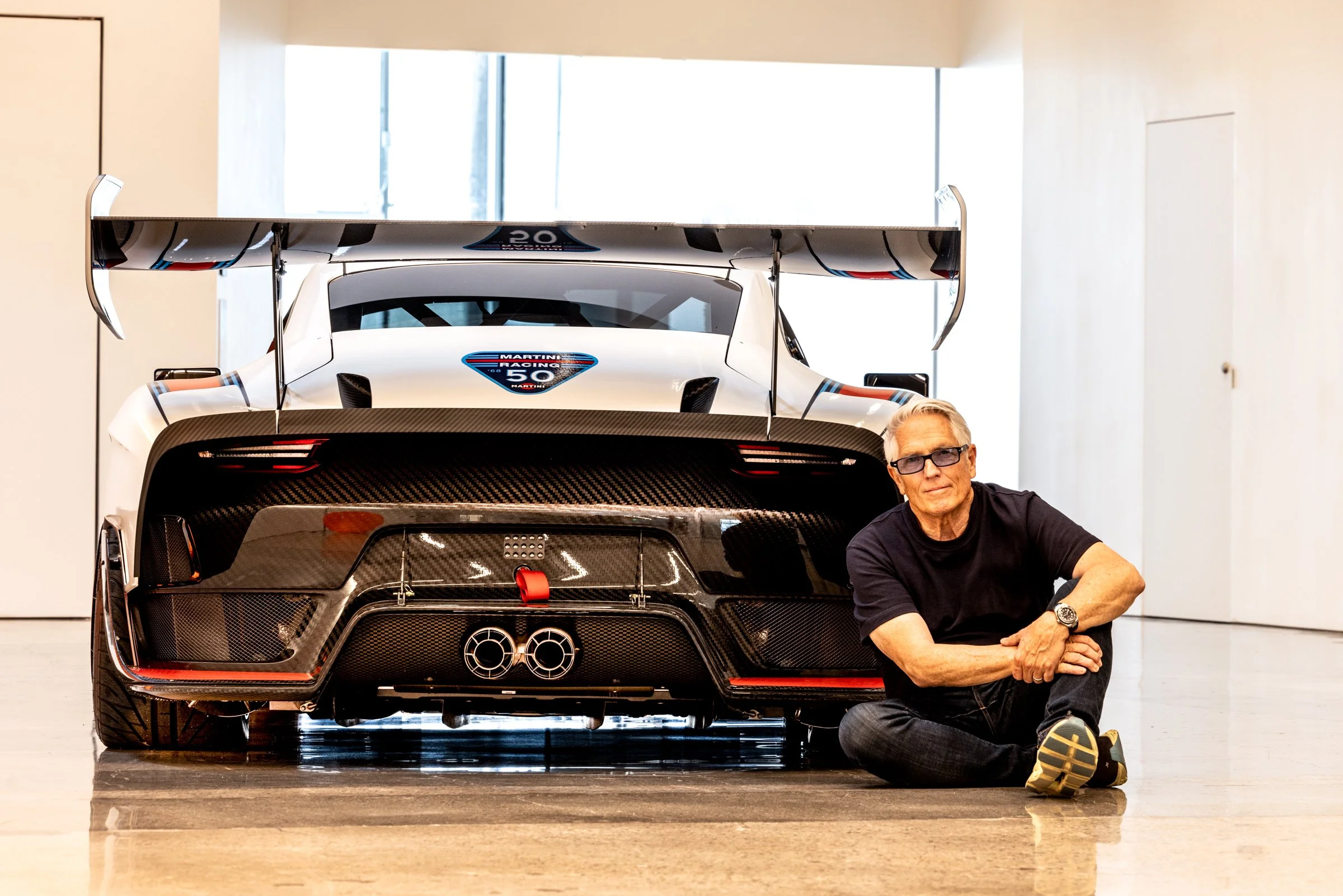
Michael Alan Ross has led a remarkably charmed life. As one of the most respected automotive photographers in the business, Michael’s ability to capture and accentuate the personality and attitude of his subjects is unparalleled. The images Michael creates are powerful, cinematic, and capture the very essence of the cars and people he shoots. They often become the definitive photos of that car–particularly in the worlds of Porsche and American hot-rods, where Michael is considered first-call.
While part of the magic in his work stems from his genuine love of the subject matter, Michael takes an intentional approach to preparation and composition that forces him to slow down and craft a vision for each shoot. It’s a way of working that increasingly feels like a lost art in the run-and-gun world of contemporary photography, and one any creative can learn from in the turbulence of the digital age.
As intentional as he may be as a photographer, Michael will be the first to tell you nothing in his life was planned. His origin story has the makings of a screenplay; he’s been a professional musician, a model and actor, and he cut his teeth shooting still life for luxury brands before finding his calling as an automotive shooter. In each situation, Michael’s intuition and openness to new opportunities led somewhere unexpected.
David Von Bader spoke with Michael about his uncanny path to automotive photography, how intentionality and slowing down make a difference in his work, and how to define your own creative voice while still making a living.

David: The backstory of how you transitioned from a career as a musician, to a model and actor, to a photographer is really incredible. Could you give a little synopsis of how you wound up behind the camera?
Michael: My father gave me two things when I was nine, a camera and a guitar, and I’ve made a living with both of them. I was a full-time musician for almost 25 years. One day I was recording in NYC, singing on a song for a Chevy commercial, and the producer's wife said “Have you ever thought about being in a commercial?” I said “I'm singing in one right now” and she goes “No, like in one!”
So she scouted me. I ended up with the Ford Agency and Don Buchwald’s agency doing commercials, soap operas, and print work. I wasn’t the fashion guy, but I’d get the guy next door gigs. I found myself surrounded by these amazing creative crews and traveling all over for shoots and I was always asking the crews questions about their work–things like “Can you explain why you lit it that way?” I eventually became a full-time shooter by learning from the other side of the lens. It was osmosis.
I was soaking up all this other stuff while working and your creative juices are stimulated all the time on-set. That was an amazing experience for me. Then I stumbled into the Porsche world when I bought my first 911 from Joan Jett's former drummer Thommy Price [who sadly passed away this year].
David: The Porsche world has developed into a really important creative space for you as a photographer. How did you end up so deep in it?
Michael: I bought the car from Thommy, who had put an ad in the local paper in New Jersey. When we met, he said “You’ve got to join the Porsche Club of America–and I'm going to pay for your first year.”
I went to my first PCA meeting and realized these people were crazy about these cars, and that was the catalyst to merge two of my passions. I’ve been a car guy my entire life and I had been phasing out the photo work I was doing at the time, which was shooting still life. Things like fragrance bottles for brands like Gucci and Dunhill. I just couldn't be locked in a studio all the time and I gravitated towards shooting outdoors; the way natural light plays with a gorgeous piece of sculpture like a car is really big for me and I love coming up with cool locations to shoot at.
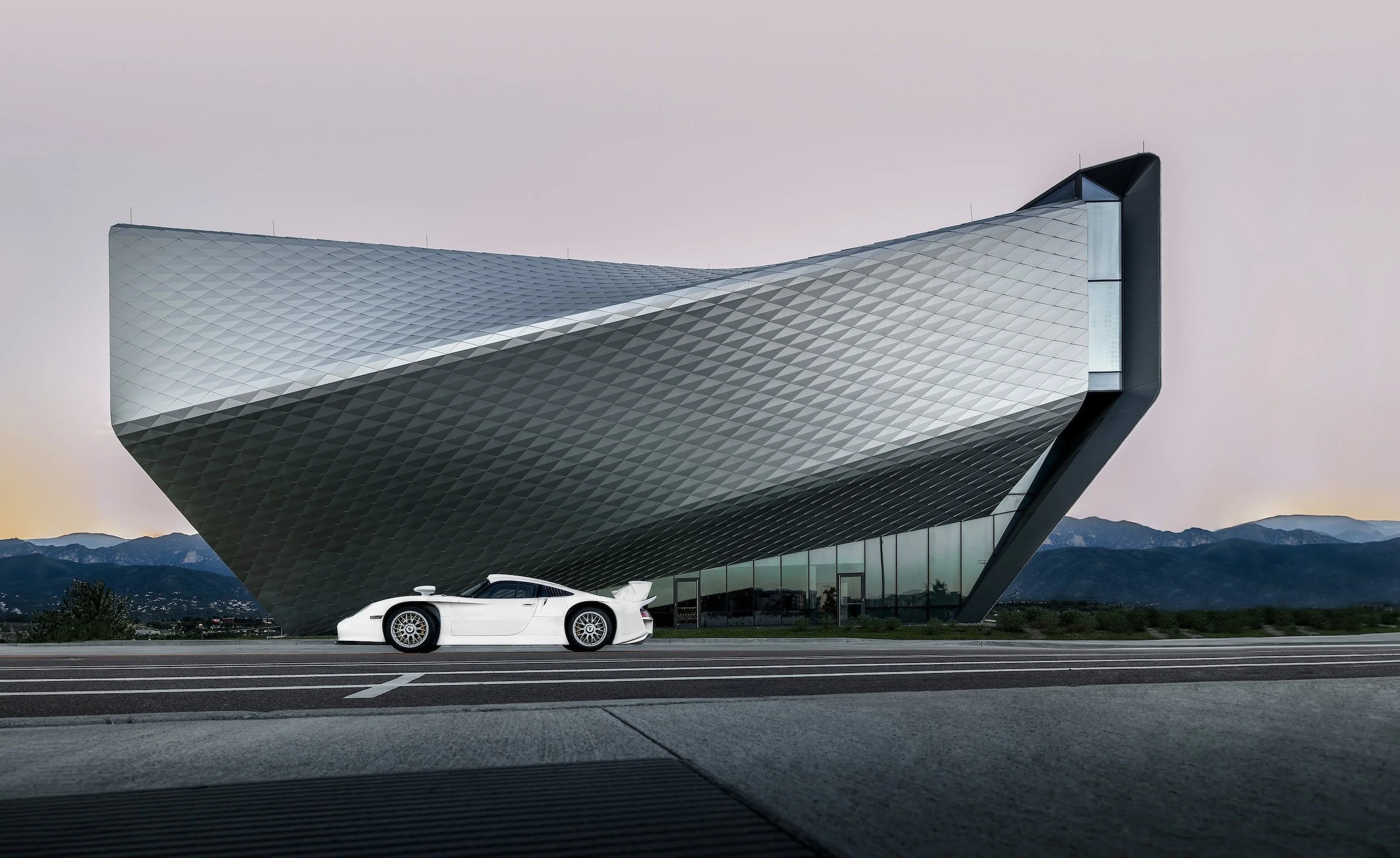
The Porsche 911 GT1 “Strassenversion” shot by Michael Alan Ross
“Finding your signature in the way you see things and finding the joy in showing that different vision is something you have to work on every day.”
David: Your work is incredibly easy to identify. Do you have any advice for someone looking to define their voice?
Michael: I don't think that you do it consciously, I think it's something that bubbles up over time. We're all inspired by so many different people and in so many different ways, for photography, I think you’ve got to stop looking at Instagram. You can't learn about composition there. Go see a movie, go stand in a cool piece of architecture that inspires you to stop and think. Be a sponge and soak up everything you can from everywhere you go. You have to learn every day.
Everybody gets caught up in the equipment and techniques, but you need to train your eye every day because what we're ultimately doing as photographers is showing the world the way we see things. We become photographers or directors because we see things differently. Finding your signature in the way you see things and finding the joy in showing that different vision is something you have to work on every day. You have to get to a point where you can't help but crop the situations you find yourself in in your head. You eventually get to a point where you can walk into any situation and instinctually know the shot is over here or over there and how you’d set it up.
One of the exercises I suggest to people is to print up ten of your favorite things you’ve shot every now and then and just throw them on the floor and look at them. There's something about making it tangible that I think is important. Then try to figure out what they all have in common. Try to figure out what works in them and what really doesn't. Analyzing your work that way gets you to start refining your thing. The greatest compliment I can get is when someone says “I knew you shot that before I saw the credit.”
David: Do you think that kind of instinct only comes from putting the miles in?
Michael: I don't know, because technology changes everything these days. But I do think you have to do the work. There's nothing like 10,000 hours.
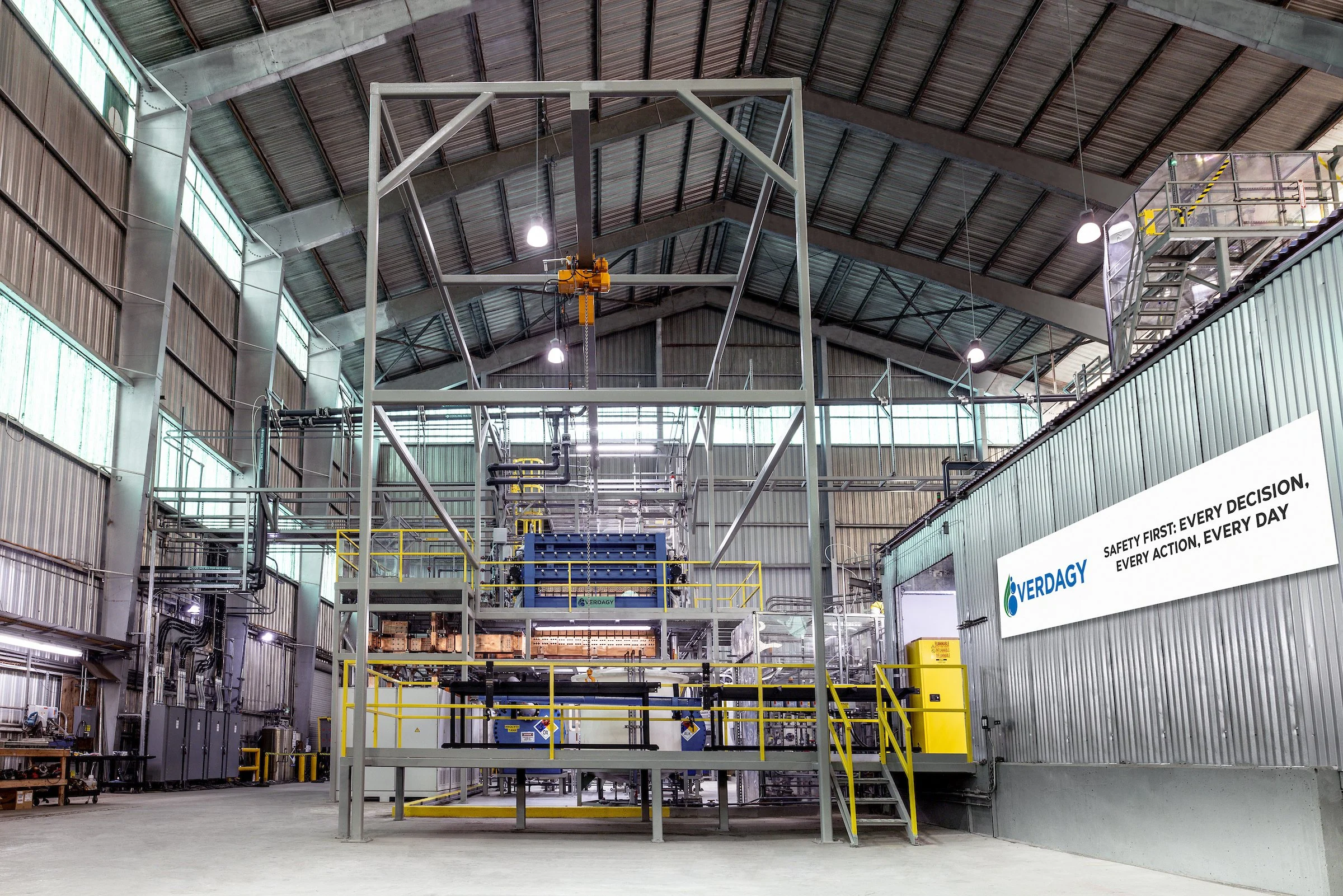
The Verdagy clean hydrogen plant shot by Michael Alan Ross
“Emotion is the goal. If you get choked up about the shot, you've done it right and you should feel something in your chest. That moment of emotion and that same feeling is what you want to inspire in other people.”
David: What are you looking to see before you pull the trigger on a photo?
Michael: I want to feel the image before I release that shutter. So much of my work is about logistics–getting things in the right place at the right time. I don’t shoot spontaneously and I'm not the guy that's going to fix it in post. I'm an old school film guy because that's where my roots are, so I want to be able to look in that viewfinder and know that I’ve done everything I can to make it work before I release the shutter. For my work, that means showing up at the right time, placing the thing in the right spot, and being ready to go when the light is right. When the moment to take the shot arrives, it's always a great release because up until then, it's all just been going on in my head and preparation. When it all falls into place, it'll choke you up if you’ve done it right.
For example, I was in Wolfsburg, Germany last year to shoot the original Porsche Boxster prototype. We placed it in the Porsche Pavilion at sunrise and I've had this shot in my head for months. There’s a movie called the Secret Life of Walter Mitty and Sean Penn plays a photographer in it. There’s this scene with a snow leopard that he’s been chasing and chasing, and when he finally gets his chance to shoot it, he's so captivated that the person with him says “When are you going to take the shot?” He goes “Sometimes if I like a moment, I don't like to have the distraction of the camera—I just want to stay in it.”
So in Wolfsburg, my art director is next to me and I'm about to take this photograph and I’m captivated by the car. My art director looks at me and goes “What's up?” I say “I'm having a Walter Mitty moment” and he goes “Take the fucking shot!” It’s funny, but it’s exactly how it happens.
Emotion is the goal. If you get choked up about the shot, you've done it right and you should feel something in your chest. That moment of emotion and that same feeling is what you want to inspire in other people. I want to create an image that makes you stop swiping.
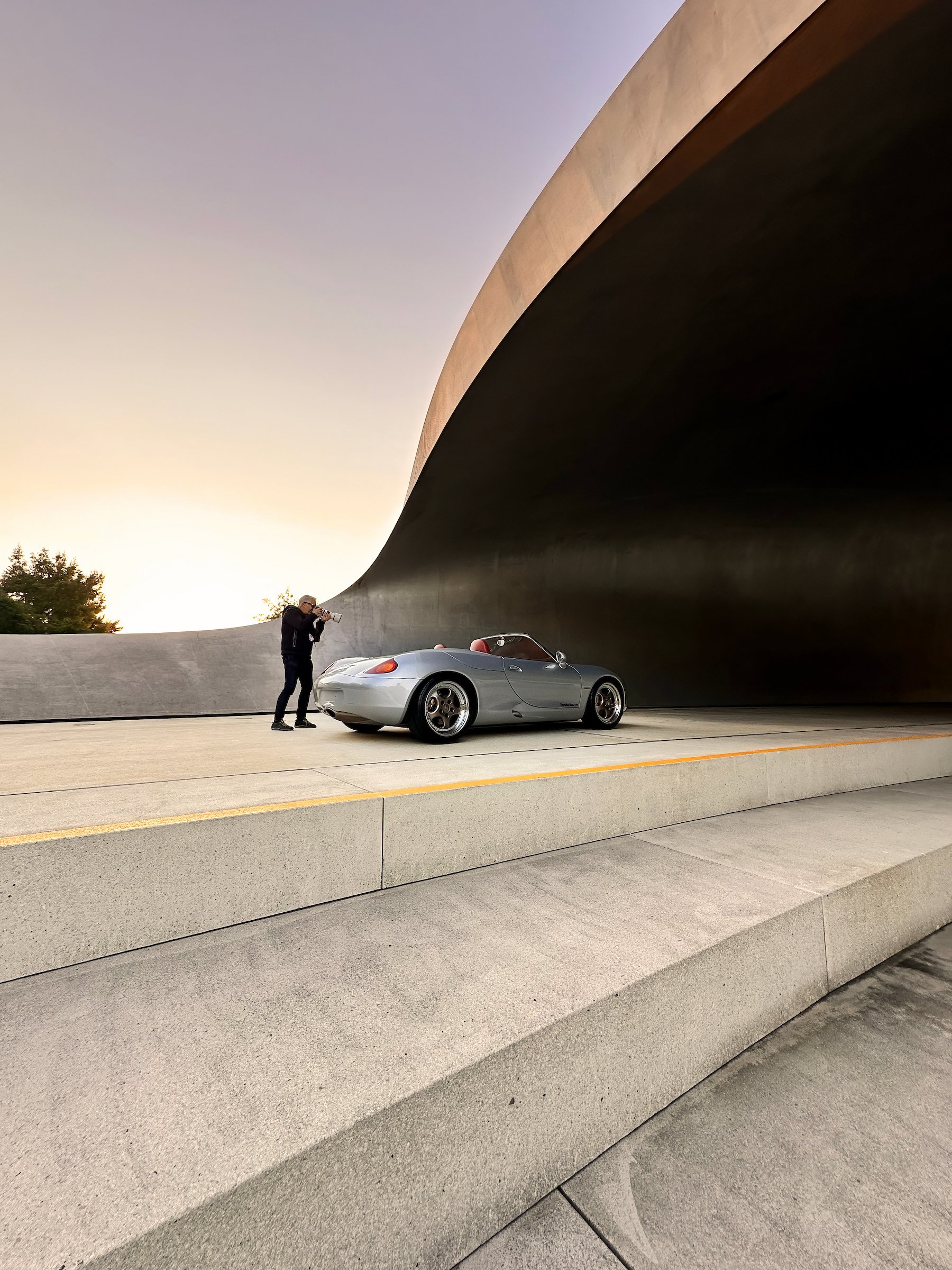
Michael Alan Ross shooting the Porsche Boxster concept car
David: A lot of working photographers started in the digital world and have been used to ripping an SD card full of images and then just editing the best frames. Your process is painstaking by comparison. Is there a magic in your old school approach that you think younger photographers miss?
Michael: It's all about composition. Composition makes the difference and when you compose a photograph correctly, you allow the viewer an opportunity to create their own story. When you use negative space properly, your eye should go to one point, and then your eye should be able to travel through the rest of the image and come back to where it started. I'm choosing where I want you to start and I'm choosing where I want you to end, but I've also given you a great space to play in, where the viewer has the opportunity to create their own story within that image.
If I can involve the viewer through composition and lighting to use their imagination, I've done something.
David: The cars you shoot tend to be very special or rare, and they all have an inherent personality of their own. How do you go about accentuating the personality of a car through composition?
Michael: I really try to choose the right background, one that either exemplifies something about that car’s shape or attitude. Every car has an attitude and a feeling about it. I have to walk around it to get inside of it and figure out what my own emotion about that car is and what I can do to bring that out in an image. Where I place that car within the frame and within a background plays a big role. Sometimes I use lines to accentuate features of the car, or sometimes we use them to make the layout a little bit more creative.
“One of the biggest things is to really understand the moment that you're in while trying to understand the moment that they're in.”
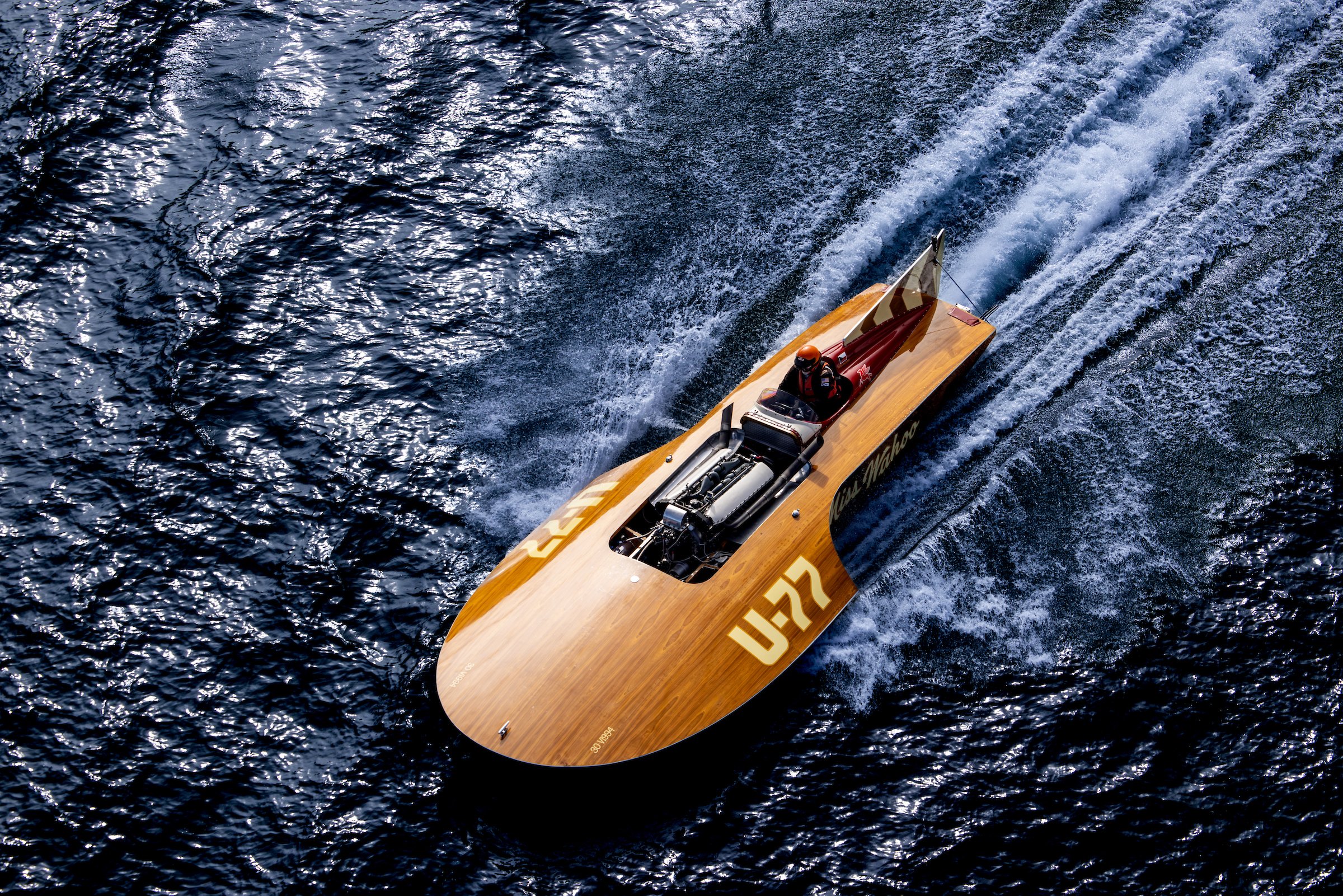
David: You’ve also done a lot of portraiture of people with cars. How does your approach change when there’s a person involved in the shot?
Michael: I’ve shot everybody from guys with their barn finds cars to racers stepping out of a vehicle after doing 300 mph on the salt flats, to guys like Keith Urban and Billy Joel. One of the biggest things is to really understand the moment that you're in while trying to understand the moment that they're in. I’ve also found that a lot of times the best image is taken within the first five frames.
David : That mirrors recording music, where the first take usually has an energy that can't be captured again. Why do you think that is?
Michael: I think it's because it's real in the beginning. The first take or the first frame is the real one. Then we go “Oh, let me polish that up a little bit” and it loses something.
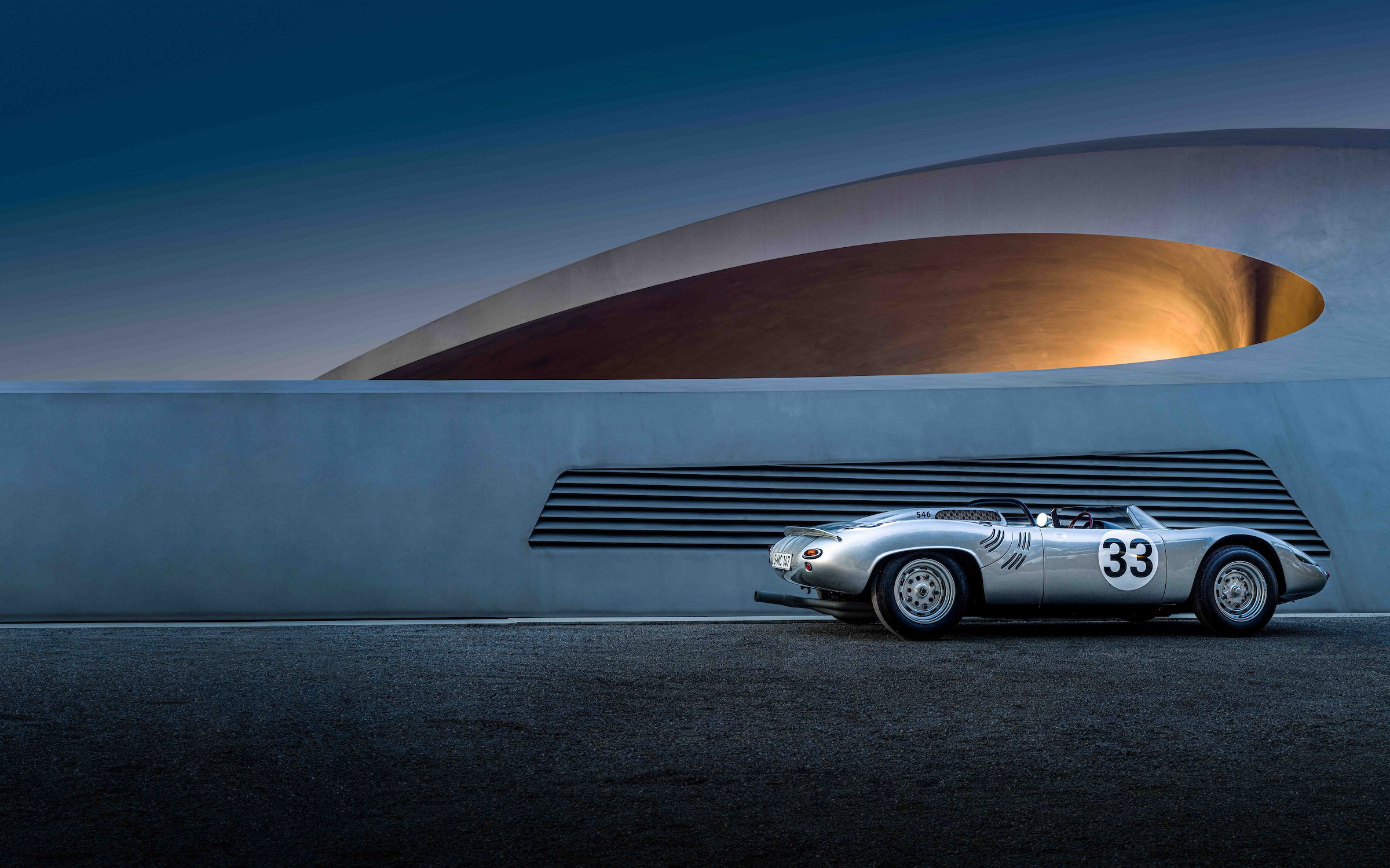
David: You’ve lived all of these creative lives. Are there any universal lessons that you’ve learned that you think apply to every creative discipline?
Michael: Never be afraid to say “yes.” There's nothing that's been planned in my life, I always just said “I could do that” or “Why not?” If you fail, you fail–it isn’t the end of the world. And I'm not done yet; I don't know what's next. I'm at a stage now where everybody's like “You're the OG” and I'm like “Okay, so?”
Do I have miles on these bones? Yeah! Do I feel like sitting back in an easy chair right now? No way! I want to come in like a GT3 racer with three flat tires, a broken front spoiler, and steam coming out of the back. I want scraped off paint, and dragging the nose in. That's the way I want to end this thing. I don't know what's next, but being open to opportunities is the most important thing.
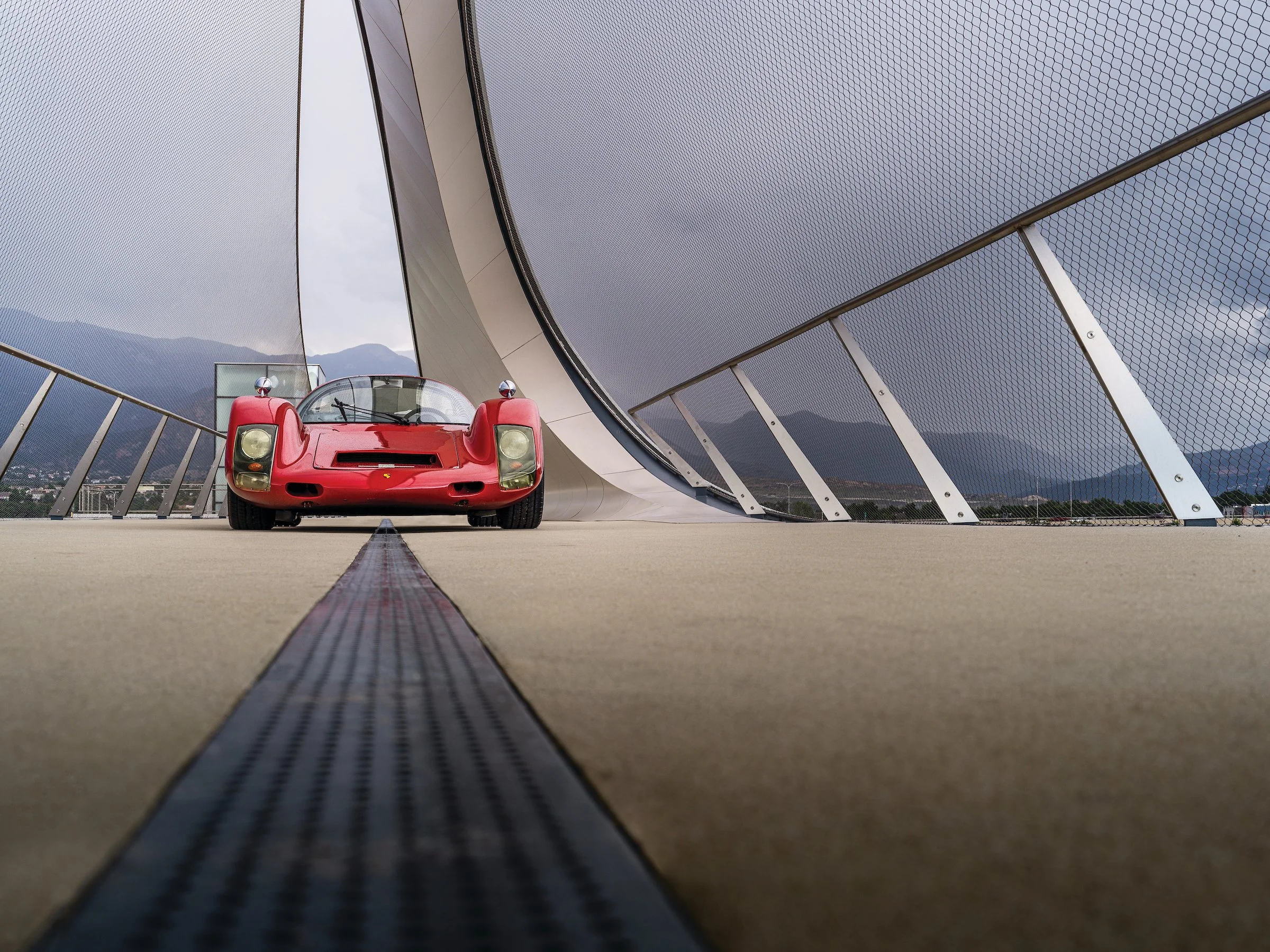
The iconic Porsche 906 shot by Michael Alan Ross
David: There's a lot of people shooting cars now and social media's changed that where, I think it's the second thing a kid does after they put an exhaust on their Honda Civic is buy a camera. Are there any trends that you really hate in automotive photography?
Michael: What I would just recommend is that people slow down a little bit and become more intentional with what they're doing. There's this shotgun approach to everything now and I’m finding there’s a lot of a “That's good enough” sentiment happening. There's a dumbing down of the industry and it all has to do with our attention span. I’d like to inspire people to become more intentional with what they're doing, to take that time to compose a photo rather than just run and gun. Try it. I'm not saying I'm right or it’s the only way, but I think people should see what it's like to actually go through that process and pick a location, do a storyboard, make a shot list, and do it in an intentional way. Slow down a little bit and be intentional with the way you create things. I think it ultimately shows in the work.
David: You work with a lot of A-list brands, too. I would assume that at this point people are hiring you for what you do and not getting in your hair very much. Do you have any advice for people that are trying to split the difference between being an artist in the traditional sense and also trying to make a living how to interact with a corporate client?
Michael: Understand that they have needs and they have a specific thing that they want to do. Even when you've established who you are and what you do, that may have attracted them, but clients still have parameters they need met.
Here's an example: I have an award from the Department of Energy for my photography of hydrogen plants. That happened because of relationships–and it happened through cars. I shot someone with an old Porsche 912 who said “I think I have some work for you.” Turns out he worked for Polestar, so I ended up shooting all this stuff for Polestar. Eventually, he left Polestar and went to work for ChargePoint and his partner went off to work for a hydrogen plant. She calls me up and asks me to come visit the plant and I’m like “Why are you calling me for that?” She says “Come down and you’ll understand.”
I go down and look at the space and it's metal, and glass, and reflective objects, and wonderfully architectural. I got it, and I got why my style would work for it. They had their needs and it was a little different from what I typically shoot, but it made sense. It's about the relationships that you build and being able to adapt in different situations.
